Fix Facebook Ad Creative Fatigue for DTC, 1 Concept per $2,000
Creative fatigue is what happens when your audience has seen the same ad enough times that they stop reacting to it, even though nothing else in the campaign has changed. The fix starts with your numbers, not your gut: pull ad-level frequency and CTR over the trailing 7 to 14 days. If frequency is climbing while CTR is dropping, that’s your signal. Add a genuinely different creative into the same audience before you touch budget or targeting. Ads Manager often confirms it for you with a “Creative limited” or “Creative fatigue” delivery status right in the interface.
TL;DR:
- Creative fatigue is caused by similar-looking ads, not audience saturation, and shows up when frequency exceeds 3.0 and CTR declines for at least two weeks.
- Running a swap test with a genuinely new creative in the same audience helps confirm whether fatigue or audience exhaustion is the primary issue.
- Visual or message changes, such as adjusting hooks or format rotation, are faster and more effective fixes than cosmetic edits like color changes.
- Maintaining 3 to 5 distinct creative concepts and tracking frequency and CTR weekly prevents fatigue from slowing campaign scaling.
- Meta flags creative fatigue through delivery status signals, but relying on ad-level metrics and a formal diagnostic process saves money and prevents unnecessary audience rebuilds.
Table of Contents
- What Is Creative Fatigue in Facebook Ads?
- What Metrics and Thresholds Signal Fatigue?
- How Does Meta Flag Creative Fatigue in Ads Manager?
- How Do You Confirm Creative Fatigue Before Acting?
- What Are the Fastest Ways to Fix Ad Fatigue?
- How Do You Prevent Creative Fatigue Long Term?
- How Do You Report Creative Fatigue to Stakeholders?
- How Does My Team at Cosma Handle Creative Fatigue?
- How Does Creative Fatigue Look Different Across Industries?
- Why Do Audiences Actually Get Tired of the Same Ad?
- What Advanced Strategies Go Beyond a Simple Refresh?
- What Are the Best Tools for Monitoring Creative Fatigue?
- How Fast Does Creative Fatigue Actually Set In?
- What Does Fatigue Actually Cost Your Campaign?
- What I’ve Learned About Managing Creative Lifespan
- Need Help Diagnosing Fatigue in Your Own Account?
- Sources
- FAQ
What Is Creative Fatigue in Facebook Ads?
Creative fatigue is a creative-level problem. It lives in the visual, the hook, and the message, not in your audience or your offer. That distinction changes everything about how you fix it, and it’s the single most common misdiagnosis I see when brands come to my team at Cosma with declining ROAS.
Audience saturation looks similar on a dashboard but comes from a different place: you’ve simply run out of new people in that targeting pool who are likely to convert. Landing page or offer fatigue is different again. Conversion rate drops even when click-through rate holds steady, which points downstream of the ad entirely. Three different root causes, three different fixes, and if you treat all three like they’re the same problem, you’ll waste budget testing the wrong lever.
Here’s a scenario that trips people up constantly. A supplement brand’s best-performing video ad starts losing CTR after three weeks. The team assumes audience fatigue and expands targeting. Nothing improves, because the actual problem was creative similarity: they’d been running six “different” ad variations that were really just the same footage with different captions. Meta’s delivery system, and more importantly the human scrolling past it, treats near-identical creatives as one repeated exposure. New file name, new ad ID, same fatigue curve.
That’s the trap worth naming directly: creative similarity means a batch of ads that look and feel the same behave like a single creative for fatigue purposes, no matter how many separate ad IDs you’ve uploaded.
A few quick diagnostic questions separate the three causes:
- Is CTR down but conversion rate on landing steady? Likely creative fatigue or audience saturation, not the offer.
- Is frequency climbing fast in a broad or lookalike audience? Lean toward audience saturation.
- Is CTR fine but conversion rate falling? Look at the landing page, checkout, or offer before touching creative at all.
- Did “new” ads use the same footage, colors, or hook structure as the old ones? That’s creative similarity disguised as fresh testing.
Getting this triage right in the first ten minutes saves you from the most expensive mistake in Meta advertising: rebuilding an audience that was never the problem.
What Metrics and Thresholds Signal Fatigue?
Signals don’t fire randomly. They follow a sequence, and knowing the order tells you how much time you have before performance really breaks down.
Frequency moves first. It’s the leading indicator because it’s simply counting how many times the average person in your audience has seen this specific ad. CTR follows next, confirming that the repeated exposure is actually costing you engagement. CPM, CPC, and CPA lag behind both, because Meta’s auction takes time to reprice an ad that’s losing relevance. By the time your CPA visibly spikes, you’ve usually already bled several days of inefficient spend.
Practitioner benchmarks give you real numbers to act on rather than a vague sense that “something feels off.” A frequency around 2.5 functions as an early warning in prospecting campaigns. Once you cross 3.0 to 3.5, it’s time to act, not just watch. Above 4.0, treat it as critical for cold audiences. Retargeting is the exception here: warm audiences tolerate higher frequency because repetition often reinforces intent rather than eroding it, so don’t apply prospecting thresholds to a retargeting campaign and panic prematurely.
CTR tells a similar story on its own timeline.
| Signal | Early warning | Act now | Critical |
|---|---|---|---|
| Frequency (prospecting) | ~2.5 | 3.0–3.5 | 4.0+ |
| CTR decline (week over week) | 10% | a rising percentage over 2 weeks | Sustained drop past 3 weeks |
| First-time impression ratio | Below average | Less than half | Under one third |
Fatigue rarely shows up as one metric moving. It shows up as two signals moving together over the same seven-day window, which is the working diagnostic practitioners rely on to separate a genuine fatigue curve from normal weekly noise.
First-time impression ratio deserves more attention than it usually gets. It tells you what share of today’s impressions are going to people who have never seen this ad before. A campaign can look healthy on total impressions while this ratio quietly signals the audience pool has gone stale.
Read these signals as a stack, not a checklist. Frequency crossing 3.0 alone might just mean a small audience.
How Does Meta Flag Creative Fatigue in Ads Manager?
Meta’s Delivery column in Ads Manager will occasionally show a status like “Creative limited” or “Creative fatigue” directly next to an ad. That status reflects how often the same user has been shown the same creative, pulled from exposure data that spans your account, not just a single ad set.
Account Insights goes a layer deeper. It distinguishes creative-level repetition from campaign-level frequency, which matters because a single creative can rack up heavy exposure across multiple campaigns you’re running simultaneously, something ad-set-level frequency alone won’t show you.
The research behind these flags is worth understanding, because it explains why Meta built them in the first place. Meta’s own analytics team modeled how click likelihood decays with repeated exposure and found the decay follows a consistent shape, roughly (N+1)^-0.43, with click probability dropping by around 45% by a person’s fourth exposure to the same ad. In the same analysis, adding new creative into ad sets flagged as high-fatigue produced an average 8% lift in conversions, a meaningful gain for a fix that costs nothing but a new asset.
A few things worth knowing before you lean on these flags entirely:
- The flag is diagnostic, not predictive. It tells you fatigue is already happening, not that it’s about to.
- It can lag your own metrics by a few days, since it’s aggregating exposure data across your account.
- Advantage+ campaigns pool creative across a wider automated delivery system, which can mask fatigue at the individual-ad level even as overall account performance softens.
Treat the Ads Manager flag as confirmation, not your primary alarm. Your own frequency and CTR tracking should catch the trend first.
How Do You Confirm Creative Fatigue Before Acting?
Guessing wrong here costs real money, since rebuilding an audience when the actual problem is creative wastes a week and resets learning for nothing. Run this sequence instead.
- Pull ad-level frequency and CTR over a 7-day trailing window. Don’t use lifetime numbers. Fatigue is a recent trend, and lifetime averages will hide it.
- Check whether CTR trend and CPM/CPA are moving together. Two signals confirming each other in the same direction over the same week is your green light to keep investigating; one signal alone is often just noise.
- Launch a swap test. Introduce one genuinely new creative into the same audience and same ad set structure, with a modest test budget, and watch for a rebound over 3 to 5 days.
- Read the result against a simple decision matrix.
Once the swap test runs, the outcome tells you exactly what you’re dealing with:
- Performance recovers in the same audience → it was creative fatigue. Keep the audience, rotate the creative library.
- Performance recovers only when you also test a new audience → it was audience saturation. The creative was fine; the pool was tapped out.
- Performance doesn’t recover either way → look downstream. Check landing page speed, offer clarity, or checkout friction before touching creative or targeting again.
This is the same triage logic I walk through in more depth in my guide to running a full Facebook ads audit, and it’s worth running as a standing weekly process rather than a one-time emergency check.
What Are the Fastest Ways to Fix Ad Fatigue?
Not every fix requires a full creative overhaul, and knowing which lever to pull first saves your team a production cycle.
Hook-swap is the fastest lever you have. Change the first three seconds of a video, the opening line of a static ad’s headline, or the thumbnail frame, while keeping the proven body and offer intact. This resets how Meta’s algorithm evaluates the ad’s early engagement signal without throwing away the parts that were already working.
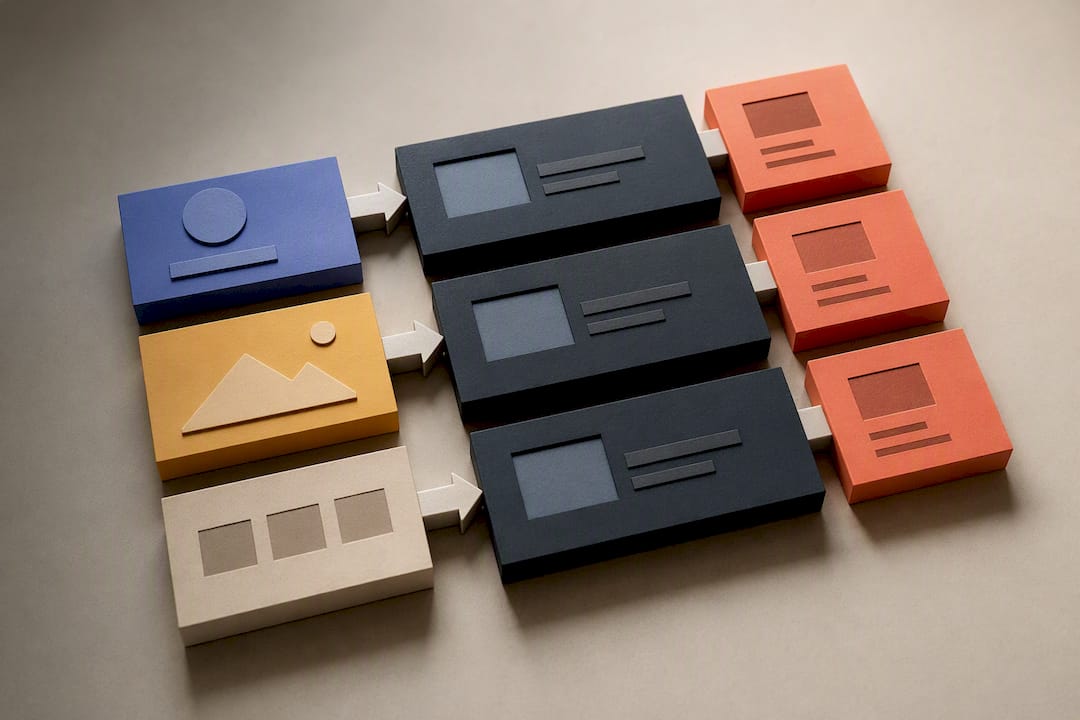
New concepts beat cosmetic edits, every time. Swapping a background color, changing a font, or recoloring a button is not a refresh. It’s the same creative wearing a different shirt, and Meta’s delivery system, along with your audience, tends to treat it that way. A genuinely different angle, a new pain point in the messaging, a different format entirely (UGC instead of studio footage, for instance) resets fatigue in a way a palette swap never will.
Duplication is a tool, not a default. Duplicating a winning ad into a fresh ad set can redistribute delivery and buy you a few more weeks of life from the same asset, particularly useful when Advantage+ delivery has concentrated spend unevenly. But duplicating without a real creative change resets learning for no benefit, and I see teams do this reflexively when what they actually needed was a new hook.
Format rotation keeps novelty in the system. Rotating between video, static, and carousel formats within the same concept gives Meta’s delivery engine more variety to test, which slows the exposure decay curve even when the underlying message stays consistent.
Pro Tip: Keep the original ad live as a control when you launch a swap test. If the new creative outperforms it, you’ve confirmed fatigue AND found your next winner in the same test. If it underperforms, you’ve saved yourself from prematurely killing an ad that still had life left.
- Change the hook before you change anything else.
- Angle and message changes outperform cosmetic edits almost every time.
- Duplicate to redistribute delivery, not to dodge writing a new ad.
- Rotate formats to keep the algorithm evaluating something genuinely new.
How Do You Prevent Creative Fatigue Long Term?
Prevention beats triage, and the difference between brands that scale smoothly and brands that lurch from fatigue crisis to fatigue crisis is almost always production cadence, not talent.
Keep 3 to 5 concepts actively in flight at any given time, not just variations of one idea, but genuinely distinct creative directions. Tie your production cadence to spend rather than the calendar: a reasonable rule of thumb is one new concept for roughly every $2,000 to $3,000 in monthly ad spend on that account. Spend more, and your creative pool needs to move faster to keep pace with exposure.
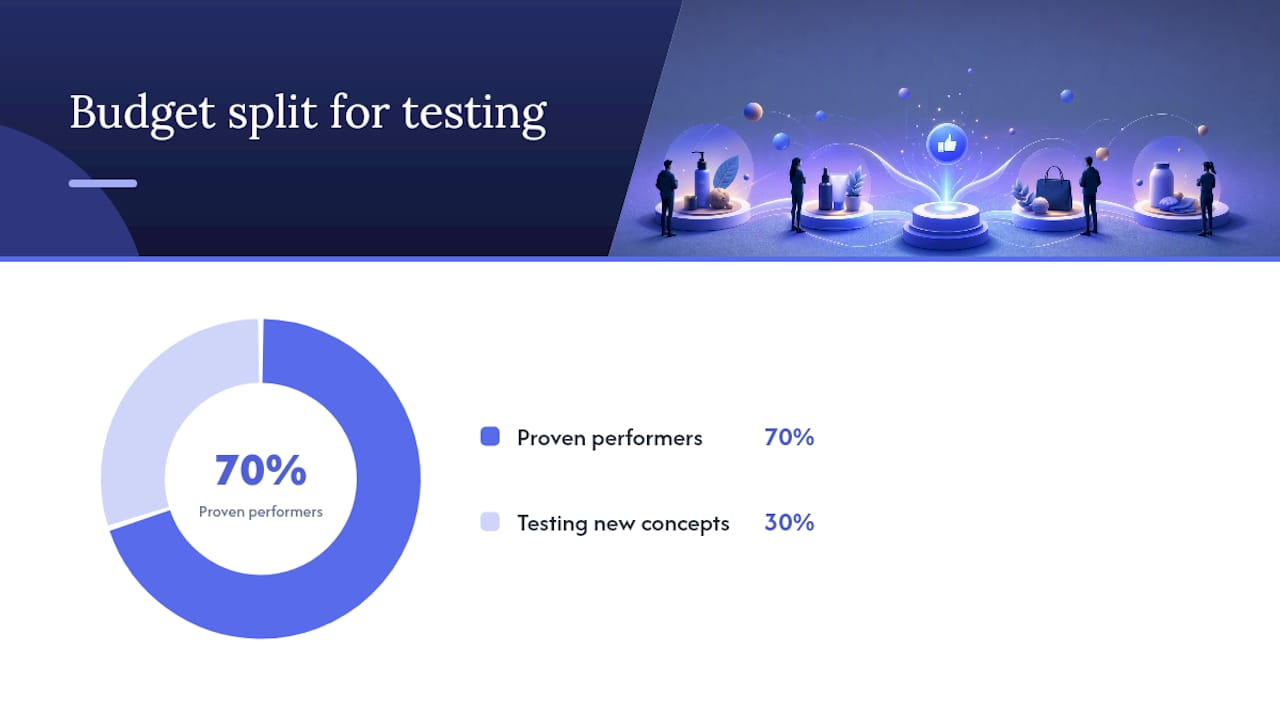
A 70/30 budget split works well as a starting heuristic: 70% of spend stays on proven performers while they’re still working, 30% goes toward testing new concepts. When a test creative outperforms an incumbent, promote it into the proven bucket and rotate the old winner out before it fully decays, not after.
On the operational side, a few habits separate teams that stay ahead of fatigue from teams that constantly play catch-up:
- Batch creative shoots quarterly instead of producing one asset at a time, which cuts cost per asset and builds a real backlog.
- Build modular assets (separate hooks, body footage, and CTAs) that can be recombined without a full reshoot.
- Write briefs that specify the angle and pain point, not just “make a new version of the top ad.”
- Track every live creative in a simple log with launch date, frequency, and CTR trend, so nothing goes stale unnoticed.
None of this works without tight coordination between whoever’s building creative and whoever’s managing media buying. The media side needs to flag fatigue signals fast, and the creative side needs a pipeline ready to respond without a two-week scramble. I go deeper on building that operational structure in my performance creative framework for DTC brands, which is the same system my team applies across client accounts.
How Do You Report Creative Fatigue to Stakeholders?
Getting budget approved for ongoing creative production is much easier when you can show the cost of not doing it, in real numbers, not vague warnings.
Track these ad-level KPIs on a standing dashboard: 7-day frequency, CTR trend, first-time impression ratio, CPM, CPA, and conversion rate broken out by individual creative. Compare 7-day windows against 30-day windows side by side. A creative that looks fine on a 30-day average can be actively decaying in the most recent week, and that’s exactly the gap a stakeholder report needs to surface.
A simple “fatigue tax” calculation makes the case better than any chart. Take the CPA from a creative’s best-performing week, multiply it against current spend, and compare that to your actual CPA today. The gap, multiplied by monthly spend, is roughly what fatigue is costing you in lost contribution margin, a number that gets creative production budgets approved far faster than “the ads feel stale.”
Set alerting rules rather than checking dashboards manually. Tools like Revealbot can automate this kind of dual-condition alert directly against your ad accounts, which takes the guesswork out of catching fatigue before it shows up in your CPA.
One measurement caveat worth flagging: if your reported conversions are undercounting due to tracking gaps, a creative can look fatigued when the real issue is data loss downstream. That’s a separate problem worth ruling out, which I cover in my guide to server-side tracking for ecommerce.
How Does My Team at Cosma Handle Creative Fatigue?
At Cosma, the sequence never changes: frequency and CTR first, Ads Manager flags second, swap test third. We don’t touch audience or budget until the swap test tells us what we’re actually dealing with.
The team’s instinct was to expand the lookalike audience. Instead, we ran a swap test, a new UGC concept with a different pain point, same audience, same budget. CTR recovered to baseline within four days. That confirmed creative fatigue, not saturation, and saved the account from an unnecessary audience rebuild that would have reset learning for no reason.
The most common execution mistake I see is treating a font or color change as a “new” creative. It isn’t, and the algorithm generally doesn’t treat it as one either. The second most common mistake is over-relying on duplication to dodge the harder work of actually writing a new hook. Duplication redistributes delivery; it doesn’t create novelty.
A one-page checklist worth keeping at your desk: check frequency and CTR weekly, confirm with a swap test before touching audience, keep 3 to 5 concepts in flight, and promote test winners into your proven budget the moment they outperform.
How Does Creative Fatigue Look Different Across Industries?
Ecommerce apparel and beauty brands tend to see fatigue fastest in video ad formats, often within two to three weeks, because their audiences skew younger and scroll through more content daily on platforms where short-form video dominates attention. A static product photo ad in that same account can hold up longer simply because it’s competing against a feed full of video.
Supplement and wellness brands running direct-response UGC ads often see a different pattern: the hook fatigues before the body of the ad does. The first three seconds get “burned” fast because viewers pattern-match the opening line quickly, even while the underlying offer and testimonial content still convert well for people seeing it fresh.
High-ticket categories like furniture or fitness equipment usually fatigue slower in raw frequency terms, but the cost per fatigued impression is much higher, since the audience pool is smaller and CPMs run higher to begin with. A B2B or subscription box brand running retargeting-heavy campaigns can sustain frequencies that would tank a prospecting campaign, because repeated exposure to warm leads reinforces intent rather than eroding it.
Carousel and collection ad formats tend to resist fatigue longer than single-image or single-video formats, mostly because the format itself introduces variety within one ad unit, spreading exposure across multiple images rather than repeating one.
Why Do Audiences Actually Get Tired of the Same Ad?
The mechanism is simpler than most marketers assume: novelty drives attention, and attention drives clicks. The first time someone sees your ad, their brain registers it as new information worth a glance. By the fourth or fifth exposure, that same brain has already extracted whatever value or curiosity the ad offered, and it starts filtering the ad out before conscious attention even engages, the same reflex that lets you tune out a familiar hallway poster.
This isn’t unique to Facebook or advertising generally. It’s the same habituation response that makes a song you loved a month ago suddenly grate on repeat listens. Meta’s own research on exposure decay essentially quantified this instinct, showing click likelihood dropping in a predictable curve as exposures accumulate.
There’s a secondary effect worth understanding too: repeated exposure to the same message can start to feel like being sold to more aggressively, even when the ad itself hasn’t changed frequency of appearance in absolute terms. Familiarity breeds a faint irritation once it crosses a threshold, and that irritation shows up as a lower click-through rate long before someone would describe feeling “tired” of your brand if you asked them directly.
This is exactly why cosmetic edits fail as a fix. Changing a button color doesn’t reset the psychological sense of familiarity; the brain still recognizes the underlying pattern. A genuinely new angle or format interrupts that recognition in a way a palette swap never will.
What Advanced Strategies Go Beyond a Simple Refresh?
Rotating creative is table stakes. Building a system that generates genuinely new angles on a predictable schedule is what separates brands that scale past seven figures from ones that plateau.
Concept-first briefing is one lever most teams skip. Instead of briefing “make three new versions of the winning ad,” brief three distinct customer pain points or objections, then let format follow the angle rather than the reverse. This produces creative that’s structurally different, not just visually different, which resists fatigue far longer than a reshoot of the same script.
Modular production libraries let you recombine hooks, body content, and CTAs without a full new shoot every time, which is how brands sustain the “one concept per $2,000 to $3,000 in spend” cadence without burning out a production budget. Customer research refreshes, pulling new language directly from reviews, support tickets, or post-purchase surveys, feed new hooks into that library on an ongoing basis rather than relying on the creative team to invent new angles from scratch every month. I cover this system in detail in my Meta Ads strategy guide for 2026, including how to structure the research-to-brief pipeline so it doesn’t bottleneck on one person.
What Are the Best Tools for Monitoring Creative Fatigue?
Meta Ads Manager is your starting point and, honestly, often enough on its own if you check it consistently. The Delivery column flags, combined with Meta Account Insights for cross-campaign exposure data, cover most of what a lean team needs without adding another subscription.
Advantage+ campaigns complicate monitoring slightly, since Meta’s automated delivery system pools creative and can mask fatigue at the individual-ad level even while account-level performance softens. If you’re running Advantage+, check creative-level breakdowns manually rather than trusting the aggregate campaign view alone.
For teams scaling past a few dozen active creatives, automation tools like Revealbot handle rule-based alerting so nobody has to check dashboards manually every morning. And if your reporting numbers ever look off relative to what your dashboards suggest, a server-side tracking layer like TrackAff closes the gap between what Meta reports and what actually happened, which matters because a data discrepancy can masquerade as fatigue when the real issue is lost conversion data.
How Fast Does Creative Fatigue Actually Set In?
There’s no fixed clock, but patterns hold up across most ecommerce accounts. Many top-performing creatives show measurable decline somewhere between two and five weeks of consistent spend, though the exact timing depends heavily on audience size and daily budget.
A cold prospecting campaign spending $500 a day into a narrow lookalike audience will burn through novelty faster, often within two to three weeks, than the same budget spread across a broad, algorithmically expanded audience. Retargeting campaigns can sustain a single creative for months, since the audience is small and intentionally seeing the brand repeatedly is part of the strategy, not a bug.
The practical benchmark I give teams: budget planning around a 3 to 4 week creative lifespan for prospecting campaigns is a reasonable default assumption, then adjust based on your actual frequency and CTR data rather than treating that window as a rule. Recent shifts toward Advantage+ delivery have, if anything, compressed that window further, since automated systems tend to concentrate spend on winning creative faster, which burns through novelty at a quicker pace than manual campaign structures did a few years ago.
What Does Fatigue Actually Cost Your Campaign?
The ROAS damage from unmanaged creative fatigue rarely shows up as a single dramatic drop.
That gradual decline is exactly why the fatigue tax calculation matters more than watching CPA in isolation. A campaign that’s fatigued but still profitable will keep running, quietly eating margin, until someone runs the comparison against its best week and sees the real gap. Left unmanaged across an entire account with a dozen active ad sets, that gap compounds into a meaningful chunk of monthly ad spend, effectively working against you rather than for you.
The upside is that this is one of the more fixable problems in Meta advertising. Unlike a genuine audience ceiling or a broken offer, creative fatigue responds directly to the fix, a new creative asset, and the 8% average conversion lift Meta observed from adding fresh creative into high-fatigue ad sets is a reasonable floor for what a well-timed refresh can recover.
What I’ve Learned About Managing Creative Lifespan
The mental model I keep coming back to: treat every creative like it has a shelf life you can estimate, not a lifespan you discover by accident when performance craters. Frequency and CTR are your expiration dates. Once you start reading them weekly instead of reactively, fatigue stops being a crisis and becomes a scheduling problem.
Getting leadership buy-in for ongoing creative budget is easier than most marketers expect once you frame it correctly: show the fatigue tax number, not the abstract argument that “creative needs refreshing.” Numbers move budget; vague warnings don’t.
Adopt the diagnostic checklist from this piece as a standing weekly ritual, not a one-time fire drill. The teams that do this consistently spend less time firefighting and more time compounding wins from creative that’s actually working.
— Stefano Mazzei
Need Help Diagnosing Fatigue in Your Own Account?
Most teams don’t need a full agency handoff to fix creative fatigue. They need someone to look at the account, tell them exactly which ads are fatigued versus which audiences are saturated, and hand them a prioritized plan for what to test next. That’s the gap my team at Cosma fills for ecommerce and DTC brands scaling paid acquisition in the US and Canada.
A typical engagement starts with a diagnostic pass through your ad-level frequency, CTR, and delivery flags to separate genuine creative fatigue from audience or offer problems. From there, we build a prioritized test plan and a production cadence that keeps fresh concepts moving without resetting learning every time performance dips. You can see how this plays out for real accounts in our case studies, or browse creative examples from past client work in our portfolio. If you’re ready to get a diagnostic on your own account, book a call with my team and we’ll walk through what’s actually driving your performance dip.
Sources
- Creative Fatigue: How advertisers can improve performance by managing repeated exposures (Analytics at Meta)
- Creative fatigue recommendations in Meta Ads Manager
- Ad Creative Fatigue: Signals, Thresholds & Cost | Datadrew
- How to Beat Facebook Ad Fatigue: 12 Proven Strategies
FAQ
Is $10 a Day Enough to Beat Creative Fatigue on Facebook Ads?
A $10 daily budget limits how many concepts you can test simultaneously, since Meta’s delivery system needs enough spend to exit the learning phase efficiently. At that budget, prioritize one strong concept with a hook-swap ready rather than spreading thin across multiple fresh creatives.
What Is the 3-2-2 Method in Facebook Ads?
The 3-2-2 method refers to a creative testing structure some practitioners use: three ad concepts, two ad formats each, and two audience segments, though exact definitions vary across sources and it’s not an official Meta framework. If you’re using it, treat it as a testing scaffold rather than a fixed rule for every account.
How Do You Prevent Creative Fatigue Before It Starts?
Keep 3 to 5 concepts in active rotation, tie new concept production to spend rather than a fixed calendar, and monitor frequency and CTR weekly so you catch decline before it hits your CPA. A 70/30 budget split between proven creative and active testing keeps fresh assets moving without disrupting what’s already working.
How Long Does It Take for Facebook Ad Creative to Fatigue?
Most top-performing creatives show measurable decline somewhere between two and five weeks of consistent spend, though narrow prospecting audiences with high daily budgets tend to fatigue faster than broad or retargeting campaigns.
What’s the Difference Between Creative Fatigue and Audience Saturation?
Creative fatigue means the audience is tired of the specific ad; audience saturation means you’ve run out of new people likely to convert in that targeting pool. A swap test settles the question: if performance recovers with a new creative in the same audience, it was fatigue, not saturation.


