Raise Facebook Ads Hook Rate to 30%+ by Fixing the First 3 Seconds
Hook rate on Facebook ads measures the percentage of people who watch at least 3 seconds of your video after it hits their screen. The formula is simple: 3-second video plays divided by impressions, times 100. If your account baseline sits around 25%, treat anything under 15% to 20% on cold prospecting as a kill signal, and build the custom metric in Ads Manager before you do anything else.
TL;DR:
- A hook rate below 15% to 20% on cold audiences suggests targeting or creative issues needing immediate attention.
- Reels and Stories placements often yield lower hook rates than in-feed videos and should be evaluated separately.
- Comparing hook rates across placements requires adjusting for swipe speed differences to avoid misleading conclusions.
- Consistently high hook rates above 30% with a healthy hold rate indicate strong, scalable creatives worth increasing budget.
- Testing only the first 2 to 3 seconds of video with controlled variables shortens time-to-signal and improves creative optimization.
Table of Contents
- What Hook Rate Facebook Ads Measures and Why It Matters in 2026
- How to Create and Report Hook Rate in Meta Ads Manager
- What Counts as a Good Hook Rate Facebook Ads Score
- Reading Hook Rate Facebook Ads Alongside Hold Rate, ThruPlay, and CTR
- A Practitioner’s Testing Framework for Improving Hook Rate
- Tactical Hook Fixes That Actually Move the Number
- Common Measurement Pitfalls With Hook Rate Facebook Ads
- Ready-to-Test Hook Scripts and Naming Templates
- Why I Treat the First 3 Seconds as Its Own Creative Problem
- How My Team at Cosma Can Help You Fix Weak Hook Rates
- Sources
- FAQ
What Hook Rate Facebook Ads Measures and Why It Matters in 2026
Hook rate is a ratio, not a vibe. Take 3-second video plays, divide by impressions, multiply by 100, and you have the percentage of the audience that didn’t scroll past your first frame. Meta chose the 3-second mark because it’s roughly the window where a viewer decides, often subconsciously, whether your ad is worth another second of their attention.
That decision now carries more weight than it used to. Meta’s creative-first delivery system, often called Andromeda, leans harder on early engagement signals to decide who sees your ad next, which means creative quality functions as a targeting signal in the auction almost as much as your audience settings do. A weak hook doesn’t just hurt engagement. It throttles delivery before your offer ever gets a fair test.
Hook rate matters most in three specific situations:
- Cold prospecting, where you have zero brand recognition to lean on
- Short-form placements like Reels and Stories, where swipe speed is brutal
- Any campaign where you’re testing new creative concepts against an established baseline
How to Create and Report Hook Rate in Meta Ads Manager
Ads Manager doesn’t give you a hook-rate column by default. You have to build it, and it takes about two minutes once you know the sequence.
- Open Ads Manager and click Columns, then Customize Columns.
- Search for and add 3-Second Video Plays and Impressions as visible metrics.
- Scroll to the bottom of the customize panel and select Create Custom Metric.
- Build the formula: 3-Second Video Plays divided by Impressions, then format the result as a percentage.
- Name it something obvious, like “Hook Rate %,” and save it so it’s available on every future report.
- Add ThruPlays, CTR, CPM, and CPA to the same column set so you’re reading hook rate next to the metrics that explain what it actually means.
Pro Tip: Build the report at the placement level, not just the campaign level. Reels and in-feed video pull from the same ad but behave like different products, and blending them into one number hides which placement is actually dragging your average down.
One more setup detail matters: choose impressions as your denominator, not reach. Reach counts unique people; impressions count total views, including repeat exposures. Ads Manager’s own hook-rate formula uses 3-second plays over impressions, and mixing denominators is the fastest way to get a number that looks wrong when it’s actually just measuring something different.
What Counts as a Good Hook Rate Facebook Ads Score
Public benchmarks are directional, not gospel. Your own account history, built over a rolling 30-day window, should always outrank any generic number you read online, because your audience, offer, and creative style all shift what “normal” looks like for you.
That said, published benchmarks give you a useful starting frame:
- Below about 20%: weak, likely a pattern or targeting problem
- Around 20% to 25%: below par, worth investigating before you scale spend
- Approximately 25% to 35%: good, solidly within healthy range
- Above roughly 30%: strong performance
- Well above 40%: elite territory, rare outside highly optimized accounts
A widely cited benchmark set puts good hook rate at 25% to 35%, with 30%+ considered strong and 40%+ elite, while separate aggregated data from millions of impressions pegs the cold-audience baseline closer to 25%, with a pause threshold under 15%.
Placement changes the math. Reels and Stories typically post lower hook rates than in-feed video, because swipe velocity on short-form surfaces is faster than the scroll speed in a traditional feed. A 22% hook rate on Reels might be perfectly healthy while the same number in-feed signals a problem. Vertical matters too. High-intent categories like supplements or apparel often out-hook lower-interest categories like B2B software, simply because the product itself is more visually arresting in a thumbnail-sized clip.
Reading Hook Rate Facebook Ads Alongside Hold Rate, ThruPlay, and CTR
Hook rate alone tells you whether people stopped scrolling. It doesn’t tell you whether they stayed. That’s what hold rate and ThruPlay are for, and reading hook rate in isolation is how marketers convince themselves a bad ad is working.
Hold rate measures how many people who started watching made it to a later point, typically 15 seconds. ThruPlay counts completed views (or 15-second watches on longer content) as a percentage of impressions or plays. Together with hook rate and CTR, they form a diagnostic chain, not a scoreboard.
- High hook rate, low hold rate: your opening earns attention, but the middle bores people. Fix the body, not the hook.
- High hook rate, high hold rate, weak CPA: the creative is engaging but the offer or landing page isn’t converting.
- High hook rate, high hold rate, healthy CPA: scale this creative and use it as your control for future hook tests.
Hook rate is diagnostic, not a scoreboard: for awareness campaigns, hook and hold rate carry more weight than CPA. For direct response, CPA and ROAS still get the final vote, but only after hook and hold rates confirm the creative earned a fair shot.
A Practitioner’s Testing Framework for Improving Hook Rate
Guessing at hooks wastes budget. Testing them systematically, one variable at a time, is how you build a creative library that actually compounds.
The rule is simple: change the opening 2 to 3 seconds and freeze everything else. Same body copy, same offer, same call to action. If you change the hook and the offer in the same test, you’ll never know which one moved the number.
- Pick your control: your current best-performing creative by hook rate.
- Write 5 to 15 hook variants that change only the opening visual, the on-screen text, or the first spoken line.
- Launch all variants with identical budgets and the same audience so the comparison stays clean.
- Let hook tests run 3 to 5 days before judging results; give offer tests 5 to 7 days since conversion signal takes longer to stabilize.
- Apply your kill rule: cut anything below your account baseline, or below 15% to 20% on cold audiences, regardless of how much you like the creative personally.
- Apply your scale rule: anything clearing 30% with a healthy hold rate earns increased budget and becomes your next control.
This one-variable approach is standard testing discipline for isolating what actually moves performance, and it’s the same logic I walk through in more detail in my performance creative framework for DTC brands.
Pro Tip: Don’t kill a hook test after 24 hours because the early numbers look rough. Meta’s delivery algorithm needs a minimum data set to exit the learning phase, and a hook that looks weak on day one sometimes normalizes by day three once the algorithm finds the right sub-audience.
The mistake I see most often is testing hooks and offers in the same batch, then attributing the win to whichever variable the marketer already believed in. Isolate the variable. Trust the data over the instinct.
Tactical Hook Fixes That Actually Move the Number
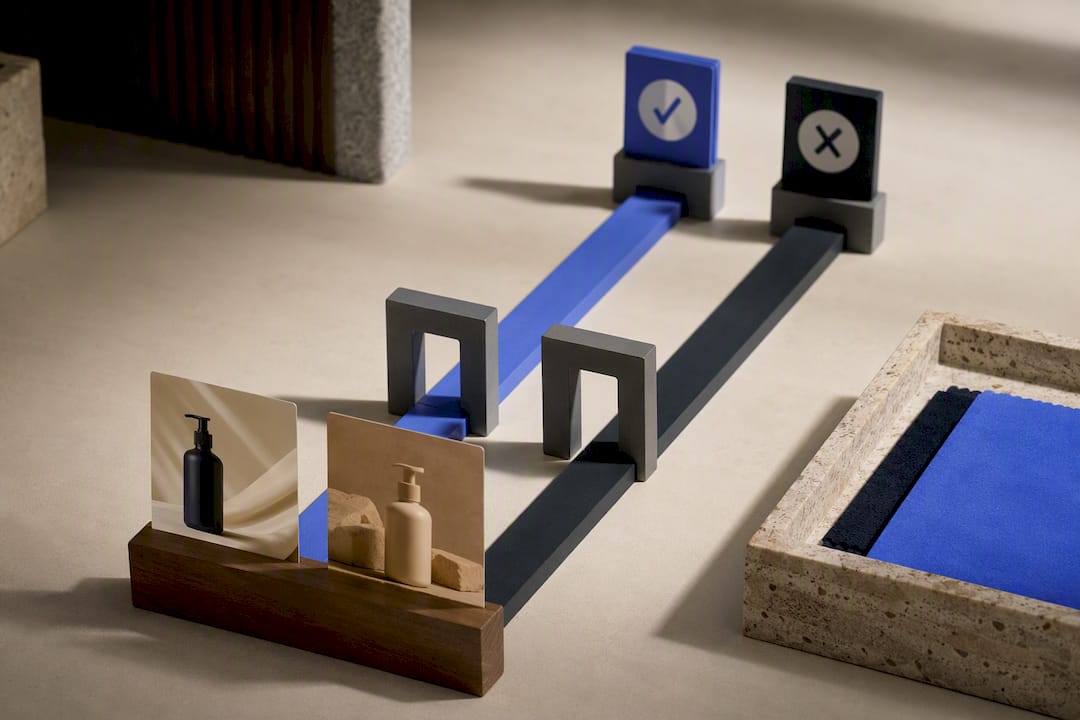
Five archetypes cover most of what works right now on Meta video. Pattern interrupt breaks the visual rhythm of a normal feed scroll, often with an unexpected color, motion, or object. Before/after shows the transformation in frame one instead of building up to it. Bold number or claim puts a specific, almost unbelievable statement on screen in the first second. POV talking-head feels native and unpolished, which reads as authentic rather than “ad-shaped.” Rapid transformation compresses a slow process into a few fast cuts that reward the viewer immediately.
Change these three things first, in this order: visual contrast in frame one, the on-screen text overlay, and the first spoken word. Elite hooks consistently avoid anything that signals “advertisement” in the first second, which is why raw, phone-shot footage often out-hooks polished production.
- Captions matter because most viewers watch muted by default
- Reels and Stories reward faster pacing than in-feed video
- Test the same hook concept across placements before assuming it failed universally
Common Measurement Pitfalls With Hook Rate Facebook Ads
The most common error is denominator confusion. Impressions and reach are not interchangeable, and comparing a Reels number calculated on reach against an in-feed number calculated on impressions will always look wrong.
- Small sample sizes create noise; don’t kill a hook after 500 impressions
- Comparing hook rates across placements without adjusting for the swipe-speed difference on Reels and Stories
- Judging performance by hook rate alone while ignoring hold rate and CPA
- Expecting perfectly stable attribution; privacy-driven variability means trends and outcome metrics like CPA matter more than any single day’s number
Ready-to-Test Hook Scripts and Naming Templates
Five micro-scripts you can shoot this week, each built around a first-frame moment:
- On-screen text reads “I wasted $400 before I figured this out,” paired with a close-up product shot in the first half-second.
- A hand knocks over or breaks something on camera, immediately cutting to the product as the fix.
- Bold text overlay states a specific statistic tied to your category, shown before any voice or narration starts.
- A talking-head opens mid-sentence, as if the viewer walked in on a real conversation.
- A fast three-cut sequence shows the entire transformation in under 2 seconds before slowing down.
Take whichever script performs best and build 3 controlled variations: one with a different opening visual, one with different on-screen text, one with a different first spoken word. Keep everything else frozen. Name every asset with a consistent convention, something like HOOK_v3_patterninterrupt_coldaudience, so your test data stays traceable weeks later when you’re comparing dozens of variants.
Why I Treat the First 3 Seconds as Its Own Creative Problem
At Cosma, we brief hooks separately from body creative. The brief specifies the opening moment only, we shoot 5 to 10 hook variations against one locked body edit, then test and scale from there. Separating hook production from body creative shortens time-to-signal and raises the hit rate for hooks that actually scale. If you do one thing after reading this, create the custom hook-rate metric in Ads Manager today and audit your last 10 video ads against it.
— Stefano Mazzei
How My Team at Cosma Can Help You Fix Weak Hook Rates
Reading benchmarks is one thing. Building a creative pipeline that consistently produces 30%+ hook rates on cold traffic is a different job, and it’s the one my team at Cosma does daily for DTC and ecommerce brands across the US and Canada.

A typical engagement starts with an audit of your current creative and account structure, then moves into hook-driven testing cycles built around the same one-variable methodology outlined above, and scales the winners into full campaigns once hold rate and CPA confirm the creative earns real budget. If you want ideas moving faster before a shoot, a tool like the AmmarAI ad copy generator can help draft hook-line variations to test alongside your video concepts. You can see how this plays out in practice in our case studies, or book a call with my team to talk through your current hook rate and where the gaps are.
Sources
The benchmark bands cited above come from Exposure’s hook rate guide, which sets the 25% to 40%+ ranges, and Ryze AI’s aggregated Meta video benchmarks, which supply the cold-audience baseline and pause threshold. The testing cadence (3 to 5 days for hooks, 5 to 7 for offers) is drawn from Shopify’s ad optimization guide. Interpretation guidance on pairing hook rate with hold rate comes from Skaler’s hook rate benchmark analysis, and the auction-level context on creative as a targeting signal comes from The Index Craft’s Facebook Ads guide.
- How to optimize Facebook ads | Shopify Blog
- Meta Video Ad Benchmarks: ThruPlay Hook Hold Rate 2026 | Ryze AI
- Hook Rate Benchmarks 2026: What Good Looks Like on Meta and TikTok | Skaler Blog
- Facebook Ads Guide 2026: Meta Campaigns, Targeting & Creative | The Index Craft
FAQ
What Is a Good Hook Rate for Facebook Ads?
A good hook rate typically falls between 25% and 35%, with anything above 30% considered strong and above 40% considered elite, though your own 30-day account average should be the primary benchmark.
How Do I Add a Hook Rate Column in Facebook Ads?
Ads Manager has no default hook-rate column, so you create one manually: add 3-Second Video Plays and Impressions as columns, then build a custom metric dividing the first by the second and formatting it as a percentage.
What Does Hook Rate Mean on Facebook?
Hook rate measures the percentage of people who watched at least 3 seconds of your video ad out of everyone who saw it, and it functions as an early signal of whether your creative earns attention in the first moment.
How Do You Calculate Hook Rate?
Divide 3-second video plays by total impressions, then multiply by 100 to get a percentage, and compare that number against your account baseline rather than a generic industry figure.
Should I Kill a Low Hook Rate Ad Immediately?
Not on small sample sizes. Wait until you have enough impressions to rule out noise, but treat anything consistently under 15% to 20% on cold audiences as a strong candidate to pause.


